Research
For a comprehensive list of my papers click here.
-
A new family of distances over partially ordered sets
Olave, Astrid A.
 arXiv: 2606.06377, Jun 2026
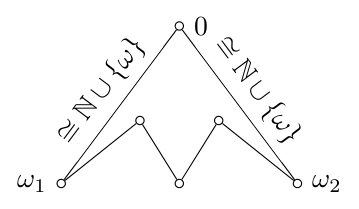
An instance of interleaving distances for partially ordered set (posets) that do not require additional order structure. These new metrics are an invariant capable of reconstructing the underlying poset and open the possibility of the study of a broader range of data that is naturally structured as a poset. -
Bounding the interleaving distance on concrete categories using a loss function
Olave, Astrid A. and Munch, Elizabeth
 arXiv: 2601.09034, Jan 2026
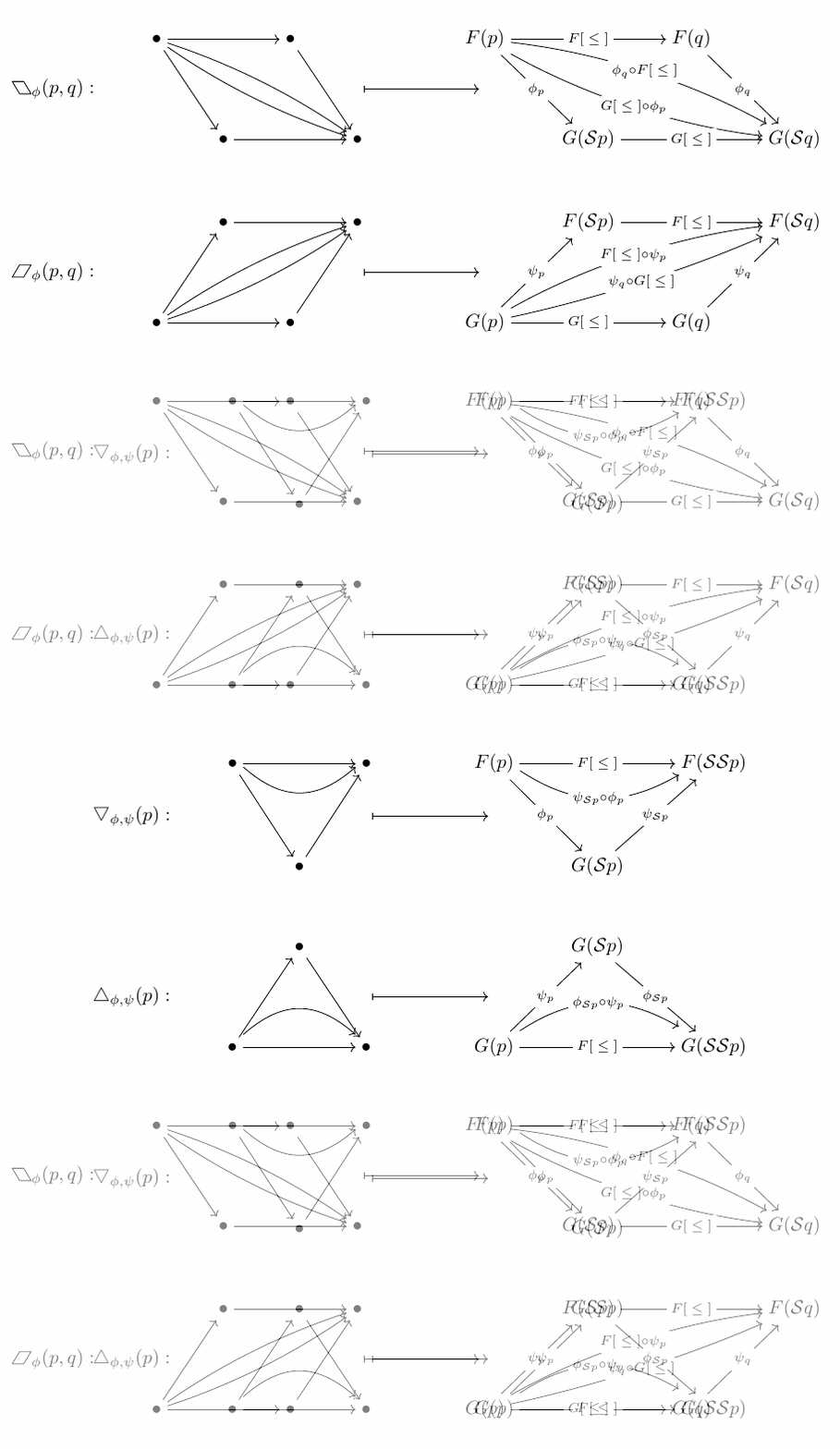
We generalized the loss function defined in Chambers et al., 2025, to bound the interleaving distance between generalized persistence modules on concrete categories. Our result opens up the potential for an algorithmic approach to bound from above the interleaving distance on commonly used constructions such as multiparameter persistence modules. -
Generalizing the interleaving distance using categorical flows
Olave, Astrid A.
Interleaving distance is a central concept in algebraic topology and topological data analysis. Through a guiding example, this video introduces categorical flows, a functorial operation, that extends the interleaving distance into a measure between objects of virtually any category. This video is part of the tutorial-a-thon 2025 Spring by the Applied Algebraic Topology Research Network (AATRN) -
Revealing brain network dynamics during the emotional state of suspense using TDA
Olave, Astrid A. and Perea, Jose A. and Gómez, Francisco
 Network Neuroscience, 2025
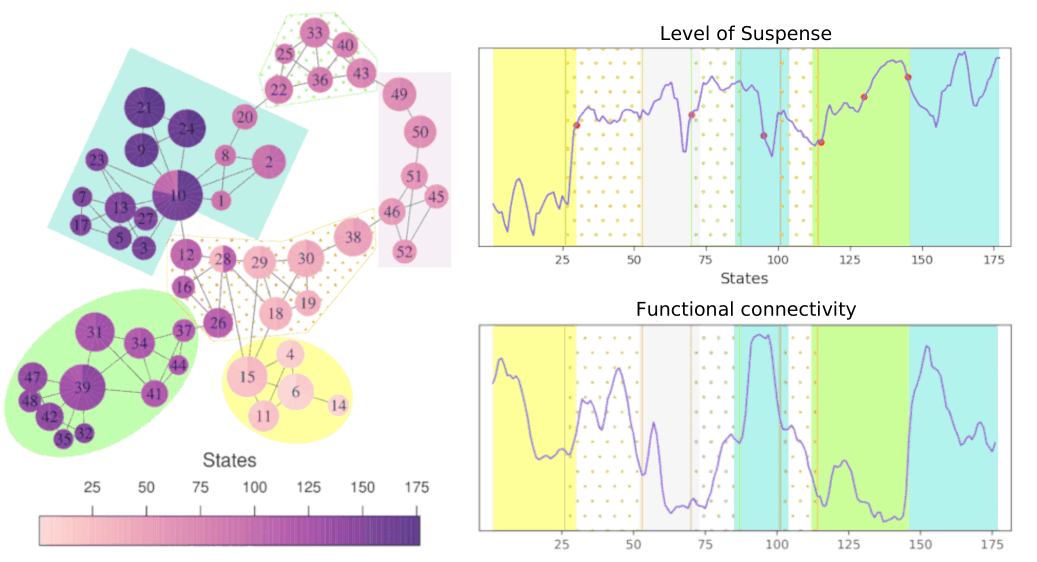
We applied Mapper, a tool from Topological Data Analysis (TDA), to find the relation of brain dynamics and suspense. As result, we found changes in the functional connectivity within and between large-scale networks associated with the level of suspense. If you want check all the details in my master’s thesis. -
Lift & project systems performing on the partial-vertex-cover polytope
Georgiou, Konstantinos and Jiang, Andy (Jia) and Lee, Edward and Olave, Astrid A. and Seong, Ian and Upadhyaya, Twesh
 Theoretical Computer Science, 2020
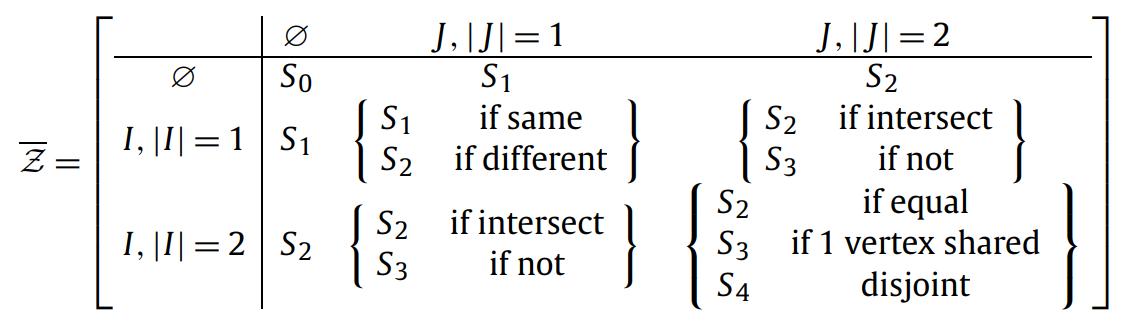
In the 2017 Fields Undergraduate Summer Research Program we investigated integrality gaps of linear programming and semidefinite programming derived by lift-and-project systems for the NP-hard t-Partial-Vertex-Cover problem. -
Persistent Homology for clusterization of RNA secondary structures
Olave, Astrid A.
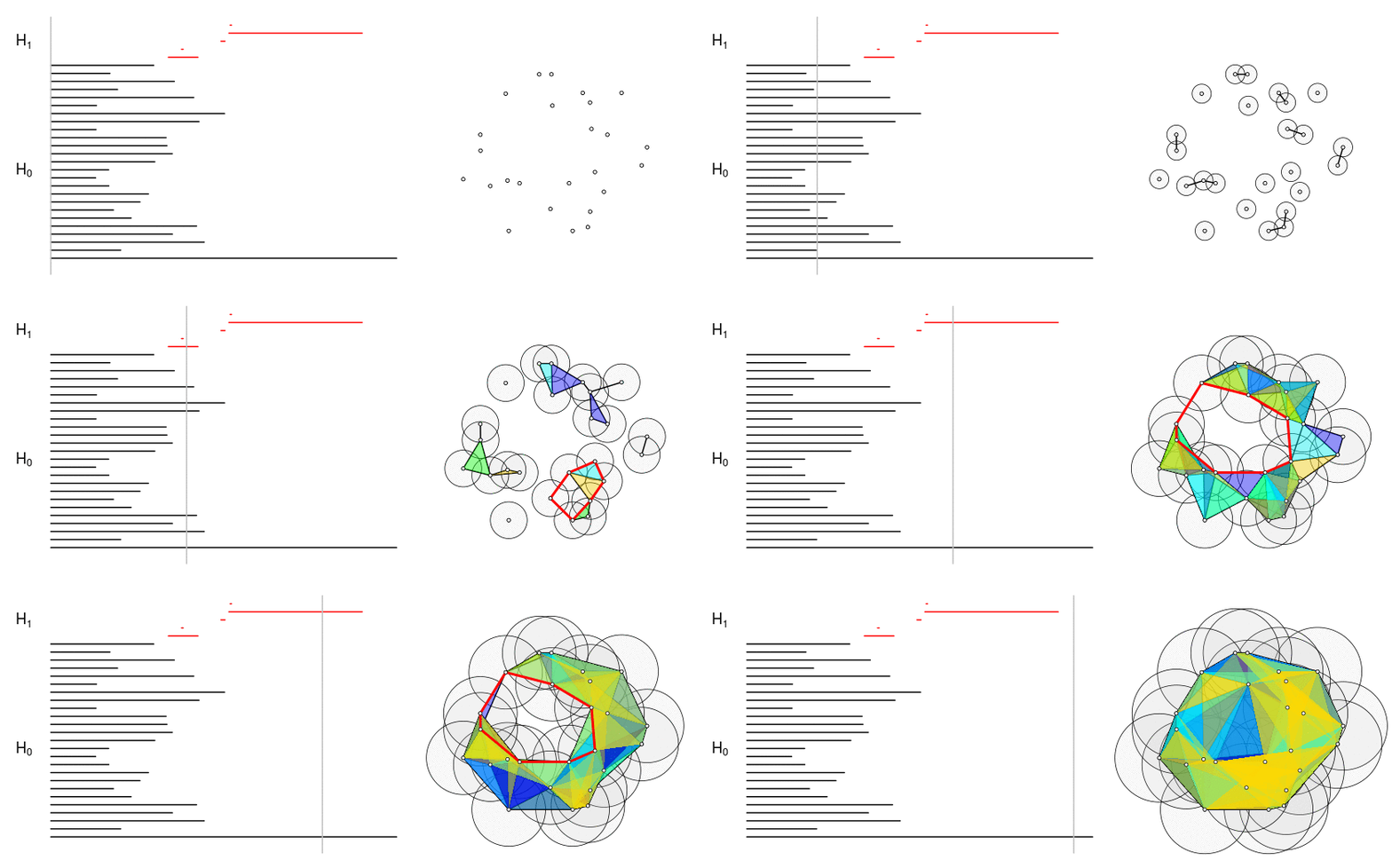 As part of my bachelor’s thesis I worked with Professors Gustavo Rubiano and Clara Bermudez applying persistent homology to cluster RNA secondary structures. We interpreted the 0-homology classes (connected-components) as clusters, resulting a method comparable to hierarchical clustering.